Publication Fee
According to the new policy imposed by the journal administration, from September 1, 2022, corresponding authors are requested to pay the publication charge as mentioned in this page.
Read more about Publication Fee
Journal of Arthropod-Borne Diseases, the scientific publication of the Iranian Society of Medical Entomology (ISME), is approved by the National Journal Commission, Iranian Ministry of Health and Medical Education. The journal publishes original research papers, short communications, scientific notes, case reports, letters to the editor, and review articles in English. The scope of papers comprises all aspects of arthropod-borne diseases, including:
● Systematics
● Vector Ecology
● Epidemiology
● Immunology
● Parasitology
● Molecular Biology
● Genetics
● Population Dynamics
● Toxicology
● Vector Control
● Diagnosis and Treatment
According to the new policy imposed by the journal administration, from September 1, 2022, corresponding authors are requested to pay the publication charge as mentioned in this page.
Read More Read more about Publication FeeBackground: Malaria remains a major global health challenge, disproportionately affecting sub-Saharan Africa. The growing threat of resistance to insecticides in Anopheles vector populations poses a major challenge to the efficacy of core interventions such as long-lasting insecticide-treated nets (LLINs) and indoor residual spraying (IRS). This systematic review aimed to evaluate the contribution of omics approaches, particularly genomics, transcriptomics, and multi-omics, to understanding the resistance mechanisms in malaria vectors in sub-Saharan Africa and their impact on current and future vector control strategies.
Methods: A comprehensive search was conducted using PubMed, Web of Science, and Google Scholar for eligible studies published between January 2016 and April 2025. Studies using at least one omics approach to investigate resistance in Anopheles species were included. We extracted and analyzed data on study location, vector species, omics methods, insecticide classes, resistance mechanisms, and key findings according to PRISMA guidelines.
Results: Twenty-two studies met the inclusion criteria. Genomic and transcriptomic approaches revealed key resistance mechanisms, notably involving metabolic resistance, target-site mutations, and cuticular changes. Multi-omics studies uncovered novel resistance markers such as CYP450 reductase (CPR), UDP-glycosyltransferases (UGTs), and salivary gland proteins. Multi-country collaborations were common, reflecting the cross-border nature of insecticide resistance, while species-specific responses highlighted localized adaptation.
Conclusion: Omics studies have significantly enhanced the understanding of resistance to insecticides among malaria vectors, offering valuable insights for molecular diagnostics and region-specific vector control. Integrating these approaches into routine surveillance is crucial to inform sustainable malaria control and elimination strategies.
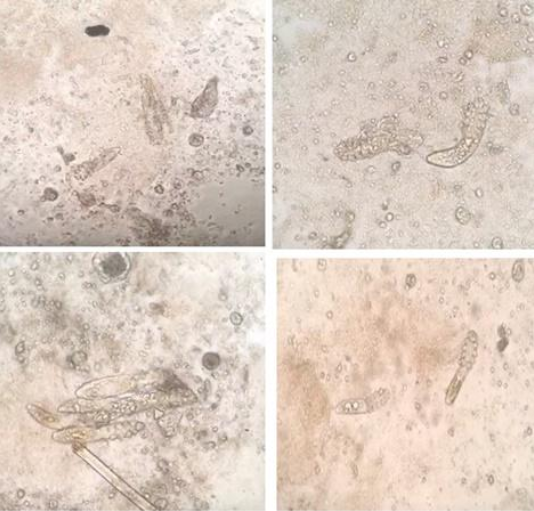
Background: Hair follicle mites of the genus Demodex (Prostigmata: Demodicidae) are the most common external obligate parasites in humans, which reside in the eyelids, sebaceous glands, and ear canal, and can cause clinical disease. The purpose of this study was to investigate the possible role of Demodex parasites in causing discomfort in patients referred to Tehran laboratories due to hair loss.
Methods: This cross-sectional study was conducted on 520 patients referred to a laboratory in Tehran, Iran, presenting with hair loss. Sampling was performed from the scalp and face, and samples were examined for Demodex mites using light microscopy.
Results: The results showed that among the 520 patients referred to the laboratory, 66.15% were infected with Demodex. Out of 344 positive cases, 83.43% were women and 16.57% were men. Among the affected patients aged between 7 and 70 years, most patients (59.01%) were in the age group of 25.4 to 39.2 years. A high prevalence of Demodex infestation (66.15%) was found among patients with hair loss.
Conclusion: Our findings establish a highly significant, direct correlation between the severity of hair loss and the density of Demodex mite infestation (p< 0.001). We propose that high Demodex mite density is a significant contributory factor in the etiology of severe hair loss.

This journal is a member of, and subscribes to the principles of, the Committee on Publication Ethics (COPE).
![]() |
All the work in this journal are licensed under a Creative Commons Attribution-NonCommercial 4.0 International License. |