
2025 Impact Factor: 1.3
2025 CiteScore: 1.9
pISSN: 2322-1984
eISSN: 2322-2271
Editor-in-Chief:
Hassan Vatandoost, Ph.D.

Vol 20 No 2 (2026)
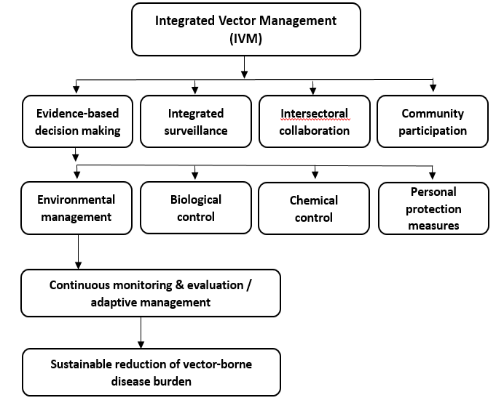
Background: Vector-borne diseases (VBDs), caused by pathogens transmitted through the bites of infected arthropod vectors, remain a major public health challenge in many developing countries. Environmental changes, urbanization, population mobility and health system limitations continue to sustain the transmission of these pathogens and the diseases they cause. Integrated Vector Management (IVM), recommended by the World Health Organization, provides a sustainable framework that combines evidence-based vector control interventions with surveillance, intersectoral collaboration, and community participation. However, implementation of IVM remains inconsistent, particularly in resource-limited settings.
Methods: This narrative review synthesized evidence from peer-reviewed literature indexed in PubMed, Scopus and Web of Science, supplemented by WHO technical guidance documents and regional surveillance reports published between 2000 and 2025. The review focused on IVM principles, implementation barriers, operational challenges and policy opportunities, with particular emphasis on Iran.
Results: The review identified several interconnected barriers limiting effective IVM implementation, including unstable financing, insufficient intersectoral coordination, gaps in entomological and epidemiological surveillance, limited community participation, inadequate technical capacity and increasing insecticide resistance. Evidence from Iran demonstrates substantial progress in malaria control while highlighting ongoing challenges related to leishmaniasis, emerging Aedes-borne disease risks, resistance management, and the need for stronger integration of environmental and surveillance systems.
Conclusion: Achieving sustainable reductions in VBD burden will depend on long-term commitment to integrated governance, resistance-informed decision-making, and context-specific strategies that enable countries such as Iran and other developing settings to build resilient vector control systems.
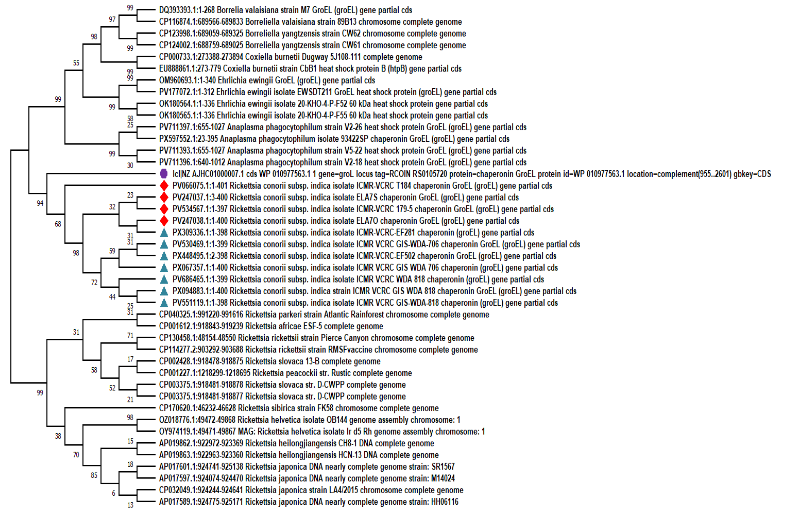
Background: Indian tick typhus (ITT) is a type of spotted fever caused by intracellular Rickettsial pathogens, specifically Rickettsia conorii subspecies indica, which exhibits unique clinical symptoms in humans compared to other spotted fevers. Human cases have been reported from several states based on hospital-based studies. However, research on the detection of these pathogens in ticks is limited.
Methods: A tick survey was conducted in different agro-climatic regions of Tamil Nadu. A total of 3,016 ticks belonging to 12 species in 532 pools were tested for the presence of the groEL gene of Rickettsia conorii indica using indigenously designed primers.
Results: Of the 532 pools tested, 44 pools (8.27 %) were positive for the groEL gene, resulting in an overall Minimum Infection Rate (MIR) of 1.50 (95% CI=1.11–1.98). The bacteria were identified in all agro-climatic regions except in the Cauvery delta region. The MIR of the screened tick species were 4.11 (95% CI=1.73–8.43) in Rhipicephalus microplus, 1.34 (95% CI=0.90–1.92) in Haemaphysalis bispinosa, and 2.85 (95% CI=1.56–4.83) in Haemaphysalis intermedia. The MIR of the ticks collected from cattle was 0.34 in cattle (95% CI=0.15–0.67), 5.50 (95% CI=3.97–7.44) in goats, and 1.37 (95% CI=0.36–3.71) in sheep.
Conclusion: The present study reports that the groEL gene as preliminary marker for the detection of the ITT-causing pathogen in field-collected ticks. The positivity of the groEL gene in the salivary glands needs further experimental confirmation. The primer needs further evaluation by comparing with MLST (Multilocus sequence typing) sequencing.
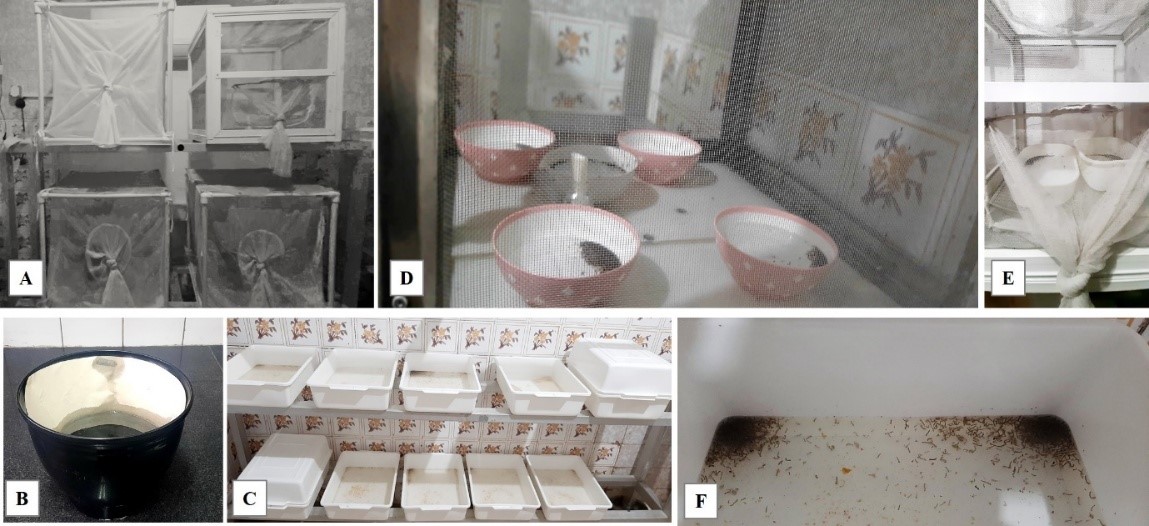
Background: Aedes aegypti is a major vector of numerous arboviruses, including dengue, Zika, chikungunya and yellow fever. This study aimed to establish a standardized and practical procedure for maintaining and propagating an Ae. aegypti colony under controlled insectary conditions in Bandar Abbas, Iran.
Methods: Environmental parameters were routinely monitored. Larvae were reared with an appropriate diet under a regular feeding schedule, while adult mosquitoes were provided with a sucrose solution and blood meals. The correlation between the duration of egg paper drying and the hatching percentage was evaluated. Hatching rates were compared across three media: cooled boiled water, yeast and larval food.
Results: A strong negative correlation was observed between drying duration and hatching percentage, with a Pearson correlation of −0.818 (p< 0.001). Gradual drying of egg papers over a period of two days resulted in a hatching rate of over 90% without any hatching stimulant. No significant differences in hatching rates were found among the three media, as indicated by F= 0.601 (p= 0.578). In a novel observation, female mosquitoes were found to deposit approximately 20−30% of their eggs directly on the water surface inside ovitraps under insectary conditions in Iran.
Conclusion: This study provides a reliable, low‑cost model for rearing Ae. aegypti in research insectaries and facilitates future studies on vector control.
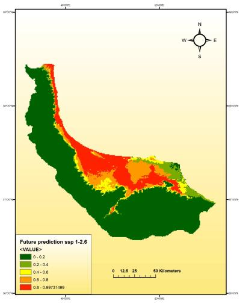
Background: Aedes albopictus, a key vector of arboviral diseases, has already been detected in Guilan Province, Iran, and is emerging as a public health concern in the country. This study aimed to identify monthly high-risk areas of Ae. albopictus and predict its distribution in Guilan Province using ecological niche modeling under current and projected climate scenarios. Guilan Province, with its high annual influx of travellers and active maritime ports, represents a strategic area for monitoring Ae. albopictus establishment.
Methods: A total of 200 occurrence points were obtained from local entomological surveys and health authorities. Four MaxEnt models were developed: current baseline (bioclimatic variables + elevation); current enhanced (bioclimatic variables + elevation + LST, NDVI, NDWI and population); and two future scenarios (SSP1-2.6 and SSP5-8.5, year 2030, CMIP6). Model performance was excellent, with AUC values of 0.909 and 0.908 for the baseline and enhanced models, respectively. Monthly thermal suitability maps were generated based on 2024 meteorological data using the optimal temperature range of 15–35 °C.
Results: Under the SSP5-8.5 scenario, risk areas expanded, and the monthly analysis indicated that nearly the entire Guilan Province exhibited suitable conditions for seven months of the year. The warm months showed the highest probability of Ae. albopictus presence across the province.
Conclusions: These findings provide critical insights for targeted vector surveillance and control strategies in the region.
Background: Dengue remains an important public health problem in tropical and subtropical settings. Aedes aegypti is a principal dengue vector and is highly adapted to domestic environments. Because repeated chemical-based control may contribute to insecticide resistance and environmental exposure, practical non-insecticide tools are needed. This study evaluated a non-insecticide multimodal trap integrating carbon dioxide, lactic acid, ultraviolet-A light and sound frequency for Ae. aegypti control.
Methods: This quasi-experimental study evaluated a laboratory prototype multimodal trap. A total of 2,850 female Ae. aegypti mosquitoes were used for multimodal combination testing and commercial-trap comparison after preliminary attractant optimization. The colony was obtained from the Parasitology Laboratory, Faculty of Medicine, Public Health and Nursing, Universitas Gadjah Mada, Yogyakarta, Indonesia. Non-blood-fed females aged 3–5 days were used. Each treatment included three replications of 50 mosquitoes. Outcomes were analyzed using the General Linear Model and repeated ANOVA.
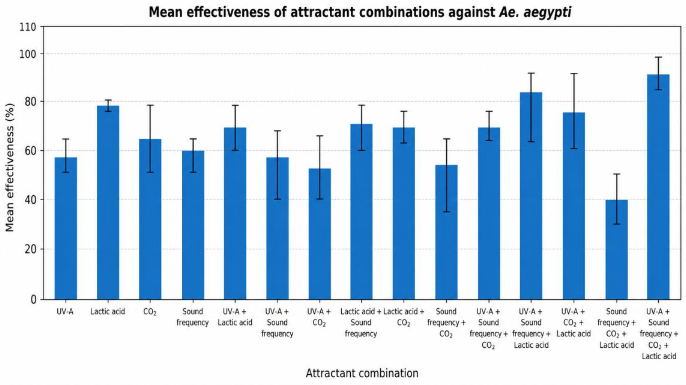
Results: Lactic acid was the most effective single attractant (78.66%). The four-mode combination produced the highest mean effectiveness (91.33%), with a maximum observed value of 98%. In the enclosed-room test, the multimodal trap performed significantly better than the Mosquito Killer BG-360 and the suction-only negative control, but not significantly better than the Photocatalyst Mosquito and Fly Trap.
Conclusion: The non-insecticide multimodal trap showed promising laboratory effectiveness for capturing or electrocuting Ae. aegypti. Semi-field and field trials are needed to assess operational effectiveness, feasibility, electrical safety and durability.
Background: The moth fly Clogmia albipunctata (Diptera: Psychodidae) has received little attention as a potential mechanical vector of drug-resistant pathogens in hospital settings. This study aimed to evaluate the antifungal susceptibility profile of fungal isolates recovered from moth flies collected in teaching hospitals of Babol, Iran.
Methods: Antifungal susceptibility profile evaluation was performed on 50 fungal isolates (including 36 filamentous fungi and 14 yeasts) collected from moth flies in teaching hospitals of Babol city, using the broth microdilution method in accordance with the guidelines of the Clinical and Laboratory Standards Institute (CLSI). The concentrations of antifungal drugs ranged from 0.032 to 64 μg/mL. Geometric mean (G-mean), MIC50, and MIC90 values were calculated for statistical analysis.
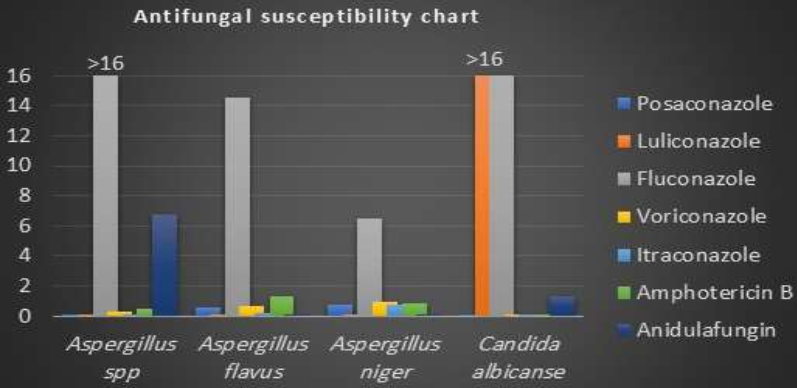
Results: Luliconazole and posaconazole exhibited the lowest MIC values against most Aspergillus isolates. Similarly, posaconazole and voriconazole displayed potent antifungal activity against Candida albicans isolates, while up to 90% of C. albicans exhibited high-level fluconazole resistance (MIC ≥ 8 µg/mL).
Conclusion: Hospital-associated moth flies were found to carry pathogenic fungi with unusual antifungal resistance patterns. These findings highlight that such insects may serve as potential mechanical carriers of drug-resistant fungi. Nonetheless, monitoring synanthropic insects could be important as a complementary measure in hospital infection control programs.
Background: The mosquito Aedes aegypti is the most important vector of many viral diseases, such as dengue virus. Thus, various chemical insecticides are being used to control this vector. On the other hand, due to the intensive blind use of chemical insecticides, mosquito vectors are rapidly developing resistance against most of them.
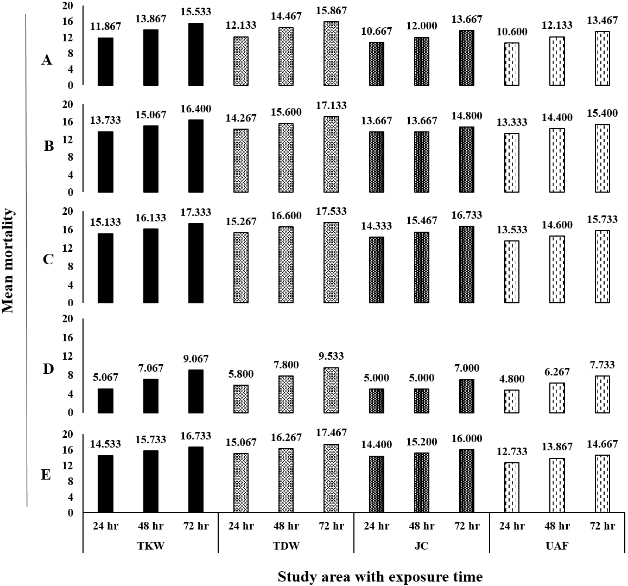
Methods: The present study was conducted during 2024–25 to explore the development of resistance in three Ae. aegypti strains with a previous history of insecticidal records compared with Laboratory (LAB) and Tidiwala (TDW) strains collected from localities (Tidiwala and rural barren land) with no or minimal use of insecticides. Resistance development was recorded by utilizing five commonly used insecticides against mosquitoes in Punjab, Pakistan.
Results: Results showed that deltamethrin was the best during 2024 when compared with alpha-cypermethrin, temephos, lambda-cyhalothrin and Bacillus thuringiensis israelensis. All field-collected strains revealed significant resistance to the tested insecticides compared with LAB and TDW strains. The same findings were reflected in the enzyme spectrum (glutathione-S-transferase, mixed-function oxidases, esterase, and acetylcholinesterase).
Conclusion: These results may help to devise a comprehensive future strategy for mosquito control through selective insecticides by limiting the spread of resistance.
Background: Reliable mapping of malaria occurrence requires validation across environmentally distinct years and careful separation of model-derived probability from transmission intensity. This study developed a multi-sensor remote sensing and machine-learning framework for mapping annual malaria case occurrence in southeastern Iran.
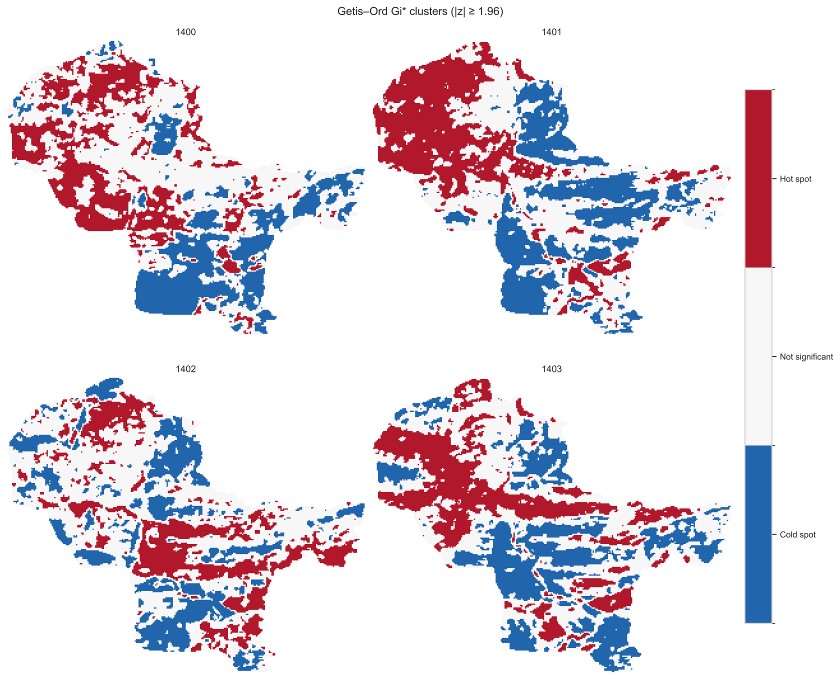
Methods: Annual median composites of Soil Water Index (SWI), Normalized Difference Vegetation Index (NDVI) and Land Surface Temperature (LST) were generated from Sentinel-1, Sentinel-2 and Landsat 8/9 at 30m resolution. After quality control, 82, 168, 775 and 483 malaria case locations were retained for the Solar Hijri years 1400–1403 (2021–2025). Five spatially balanced pseudo-absence realizations were generated annually at a 1:1 ratio with a 300m exclusion buffer. Random Forest (RF) and eXtreme Gradient Boosting (XGBoost) were evaluated through complete four-fold leave-one-year-out validation with nested tuning. Performance, bootstrap confidence intervals, uncertainty, Getis–Ord Gi* clusters and SHAP (SHapley Additive exPlanations) were assessed.
Results: Across 20 outer evaluations, RF achieved ROC-AUC 0.685±0.045, PR-AUC 0.693±0.040, balanced accuracy 0.624±0.026 and Brier score 0.230±0.015. XGBoost achieved ROC-AUC 0.687±0.044, PR-AUC 0.691±0.043, balanced accuracy 0.625±0.033 and Brier score 0.231±0.015. Year-specific ROC-AUC ranged from 0.624 to 0.726. LST was the dominant predictor (48.27%), followed by NDVI (37.04%) and SWI (14.69%). Only 3.46–6.10% of pixels exceeded probability 0.70. Mean uncertainty was low (0.030–0.032) but spatially heterogeneous.
Conclusion: Both algorithms showed moderate, comparable performance with year-dependent variation. Maps provide relative probabilities for prioritizing field surveillance, not transmission estimates.
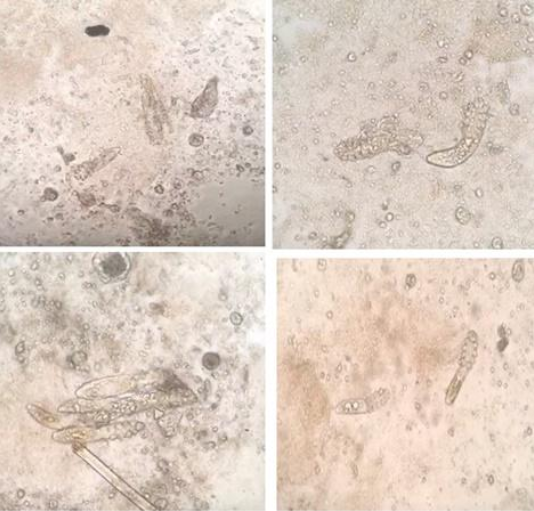
Background: Demodex folliculorum (Acariformes: Demodicidae) is a common human ectoparasite associated with various inflammatory skin and ocular disorders. This study investigated the prevalence, associated factors and molecular characteristics of D. folliculorum among individuals attending primary healthcare centers in Khuzestan Province, southwestern Iran.
Methods: In this cross-sectional study, 228 participants underwent cutaneous and ocular sampling for Demodex detection using a light microscope. Selected positive samples were identified molecularly by 18S rDNA sequencing. Demographic, behavioral and clinical data were collected using standardized questionnaires. Variables associated with infestation were evaluated by univariate analyses and multivariable binary logistic regression.
Results: Cutaneous Demodex infestation was detected in 20 participants (8.77%), while ocular infestation was identified in three participants. Molecular analysis confirmed all sequenced isolates as D. folliculorum, showing >99% similarity with reference sequences and only minor genetic polymorphisms. Multivariable analysis identified high psychological stress (adjusted odds ratio [AOR]=5.51, 95% confidence interval [CI]: 1.84–16.47; p=0.002) and active facial skin lesions (AOR=4.01, 95% CI: 1.22–13.20; p=0.022) as independent predictors of infestation. Ocular findings were reported descriptively because of the limited number of positive cases.
Conclusions: Demodex folliculorum infestation was relatively uncommon in this population but was independently associated with psychological stress and active facial skin lesions. Molecular findings demonstrated close genetic similarity between local and globally reported isolates. These results improve understanding of the epidemiology of demodicosis and support molecular identification in epidemiological investigations.
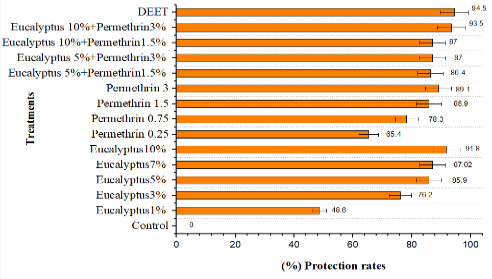
Background: Aedes aegypti is a primary vector of several clinically significant arboviruses. This study aimed to develop a nanoemulsion-based co-delivery system incorporating permethrin and Eucalyptus globulus essential oil for mosquito repellent applications.
Methods: The essential oil composition of E. globulus was determined using gas chromatography-mass spectrometry (GC-MS). Nanoemulsions were formulated using a low-energy spontaneous emulsification method and characterized for stability, droplet size distribution, and zeta potential. The optimal formulation was further examined by transmission electron microscopy (TEM) and evaluated for cytotoxicity. The repellent activity of eucalyptus essential oil, permethrin, their combinations, and the eucalyptus essential oil-permethrin nanoemulsion was assessed against female Ae. aegypti mosquitoes using the arm-in-cage assay.
Results: The nanoemulsions exhibited a mean droplet size of 93.5 nm and a zeta potential of 60–70 mV, indicating good stability. Transmission electron microscopy (TEM) confirmed the presence of spherical and uniformly dispersed droplets. The eucalyptus essential oil-permethrin nanoemulsion demonstrated strong repellency. A 3% permethrin concentration in the eucalyptus-permethrin nanoemulsion provided the maximum protection rate at 91.8%. In stability testing, the 1.5% version of the same nanoemulsion proved to be the most stable.
Conclusion: Eucalyptus globulus essential oil, especially in nanoemulsion form and combined with permethrin, shows promise as a natural repellent formulation against Ae. aegypti. However, field trials are essential to confirm these findings under natural conditions.

Vector-borne diseases remain among the most persistent and dynamic threats to global health. According to the World Health Organization (WHO), these diseases account for more than 700,000 deaths annually and impose a disproportionate burden on tropical and subtropical populations, particularly in low- and middle-income countries (1). Mosquitoes, ticks, sand flies, triatomines, black flies and other hematophagous arthropods transmit pathogens responsible for malaria, dengue, lymphatic filariasis, leishmaniasis, Chagas disease, yellow fever, Zika, chikungunya, tick-borne encephalitis and numerous emerging zoonoses. Rapid urbanization, globalization, environmental degradation, climate change and insecticide resistance are reshaping the epidemiology and geographic distribution of these infections, increasing both their incidence and unpredictability (2, 3).
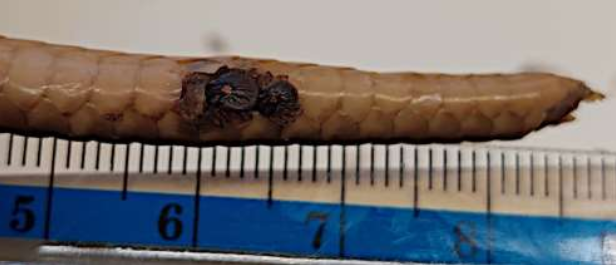
We report a historical record of the reptile-associated tick Amblyomma helvolum Koch, 1844 parasitizing the equatorial spitting cobra Naja sumatrana Laurenti, 1768, based on a preserved specimen housed in the herpetological collection of the Naturhistorisches Museum Wien (Natural History Museum Vienna, NMW), Austria.
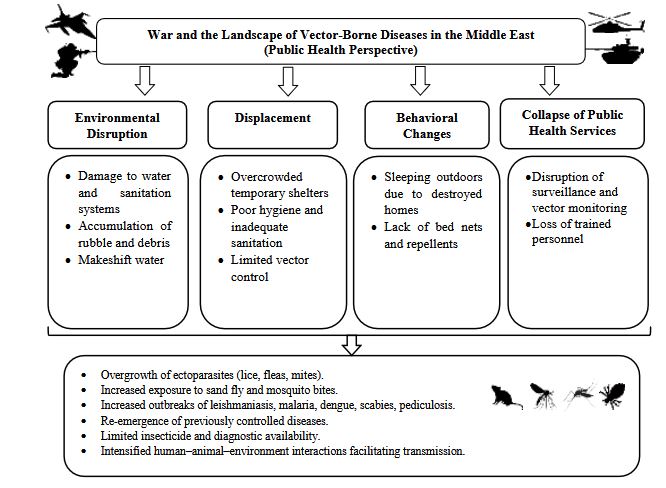
Globally, vector-borne diseases (VBDs) account for nearly 20% of the estimated burden of infectious diseases. Within the 22 countries of the World Health Organization Eastern Mediterranean Region (EMR), home to approximately 8% of the world’s population, nearly 11% of the global VBDs burden is concentrated. Some parasitic diseases, especially malaria, trypanosomiasis, schistosomiasis, onchocerciasis, loiasis, dracunculiasis and both cutaneous and visceral leishmaniasis, continue to be reported in several countries of the region (1). Furthermore, recent regional evidence highlights a substantial diversity of at least 73 arthropod-borne and arthropod-related viruses circulating across EMR countries, notably dengue, West Nile, Crimean-Congo hemorrhagic fever, Rift Valley fever, Japanese encephalitis, yellow fever, sandfly fever and chikungunya (2).

This journal is a member of, and subscribes to the principles of, the Committee on Publication Ethics (COPE).


 |
All the work in this journal are licensed under a Creative Commons Attribution-NonCommercial 4.0 International License. |